Wednesday, October 17, 2012

One Definition of Beauty in Art History


"Everything has beauty but not everyone sees it"-- Confucius


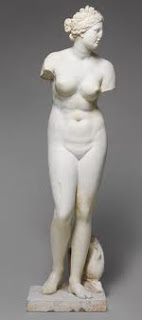
Beauty as an expression through the female nude. In whatever setting or time period. Deep breath! This is not a montage of naked ladies. (Nude vs. Naked!!)

Maria Candelaria was ultimately killed by her own people because they could not see the art and beauty behind the idea of the traditional female nude.  Even though it was not her own body shown the idea that she would pose was enough for the brutal conviction. As she continued to repeat "I never did anything bad" to Lorenzo Raphael there is a total sense of empathy and despair as they stone her. Because of her mother's reputation nothing could save Maria Candelaria. 

The artist's role in her death is likewise pitiful because he felt responsible. He just wanted to capture her beauty and show it in the best way he knew how. He did not see the social ramifications of showing her nude. 


Why is it so difficult for the Mexican people of Xochimilco to accept the art historical traditions? Is it because they are still in the stage where they want to be isolated and removed from the colonized/conquered world? Do they relate their cultural disintegration with the influence of the outside foreign arts? It seems as though these people were rejecting the giants that came before them in order to preserve what was left of their primitive natural culture. 
Before the Mexican Revolution there was a surge of folk traditions. This is the same attitude that the Xochimilco people show in relation to the modern world and the art traditions that come with. "The extension and intensity that folk-loric life exhibits in the great majority of the population eloquently demonstrates the cultural backwardness in which that population vegetates" (Ades 200). Perhaps this is why Maria Candelaria is set to take place just before the Mexican Revolution- to show this backwardness to modern progress/art/definition of beauty.  
I wonder how the Xochimilco people would react to this statement: “She's beautiful, and therefore to be woo'd She is a woman, therefore to be won” Shakespeare King Henry VI (I.V.iii) As if the nude represented this objectification or whether the beauty and idealism of the nude woman can transcend the base chauvinistic and conquering ideas in Shakespeare.

So does Maria Candelaria represent real beauty? Can the female nude in art be considered true beauty?


Wednesday, October 3, 2012

Home Decor/ Art

"To tell the truth, I'd prefer pictures of saints. These are better for bachelors' quarters or a barber shop" (Machado 100)

What does the art in our homes and living spaces say about us? Do we have pure and virtuous hearts and wish to display pictures of saints? Or does the art reflect the world around us and would be better suited for a men's club?

Within the genre of secular art there has always been the lewd and questionable type. This is no different today than in late nineteenth century Brazil. What is interesting that Conceicao does not let it bother her, yes she asks her husband to switch it, but his hesitancy or disregard does stop her from displaying and viewing the art she loves. She keeps a picture of Our Lady of the Immaculate Conception in her little oratory.

We have been counseled by prophets to keep pictures of the temple and of the Savior in display in our homes. Here is Pres Monson's The Holy Temple- A beacon to the world talk from General Conference April 2011:

Having pleasing and uplifting artwork is a reminder of the symbols and feelings associated. Thus if we see the temple often we will be reminded of it's power, sacredness and the desire to go inside. When Conceicao mentions the saint in her oratory the Mass comes to mind and a even deeper conversation ensues. The quality art, even just thinking about it provokes deep and meaningful conversation. Imagine what looking at good art could have done for the conversation of the Midnight Mass...

Filling a home with good art is like soothing music and distilling beauty. Learn how to do it yourself! {{Temple pictures and Mormon art are NOT the only art deemed 'good'}}. But here are a few pretty temples. 


Wednesday, September 26, 2012

The Enchanting Landscape


"Now I really feel the landscape, I can be bold and include every tone of blue and pink: it's enchanting, it's delicious." --Claude Monet


Velasco, Jose Maria Mexican Landscape with Cone of a Volcano (1887)


Asher Brown Durand 1859
The Catskills, The Walters Art Museum. Hudson River School


Ansel Adams The Tetons and the Snake River (1942) Grand Teton National Park, Wyoming.

The landscape tradition is enigmatic and elusive, the physical world taken into perspective of the feelings of light, shadow, color, line, composition and place. The scene is ever changing and puzzling yet so revealing about the world that we see. Any lanscape is a displacement of time because the land will never look exactly the same again. The Velasco's Mexican landscape in oil on canvas (1887) is just as relevant as Adams' (1942) black and white photograph. Time is not relevant because that change is always constant. 

The earth in all of its splendor can personify any given trait- calm, fierce, dynamic, beautiful, majestic etc. Because nature has all of these varying traits and they are usually more than one in any given landscape, it intensifies the contrasts. "The beautiful savage was radiant with smiles, as the ripening flower opens its petals, and she leant upon the shoulder of her warrior" (Alencar. 71) Anyone of these landscape examples can be termed beautiful but they are each savage in a way that man has not taken control and stripped the natural power from the scene. The flowers ripen and bloom and are in constant flux much like a river always flows or leaves change and fall. Nature can be savage and beautiful all at the same time. In submission and love yet in conflict. Just like our friend Miss Iracema. She represents this beautiful Mexican landscape- the unparalleled beauty but she too is so dynamic as she interacts with her warrior. Like Monet describes above, Iracema is delicious, enchanting, and terrible.

Velasco captures the essence of Mexican land in that one instant. But he does not have an impressionist glance or a topographer's factual rendering of the mountainside. It's the ideal beauty of the feeling within the moment while beholding such a landscape. Durand like Velasco was looking at a new frontier and seeing the vast beauty of America. He too painted the feeling of the land with all the possibility and grandeur. Adams had the advantage of the moment with photography so he just had to be more precise to capture the light in the right moment with his landscapes. 

The landscape tradition is not constrained by culture or place. Many landscapes will look similar across the years because the feeling of open land, embodying beauty and savage at the same time, is only capturing the instant of the artist being in awe and wonder of such grandeur.